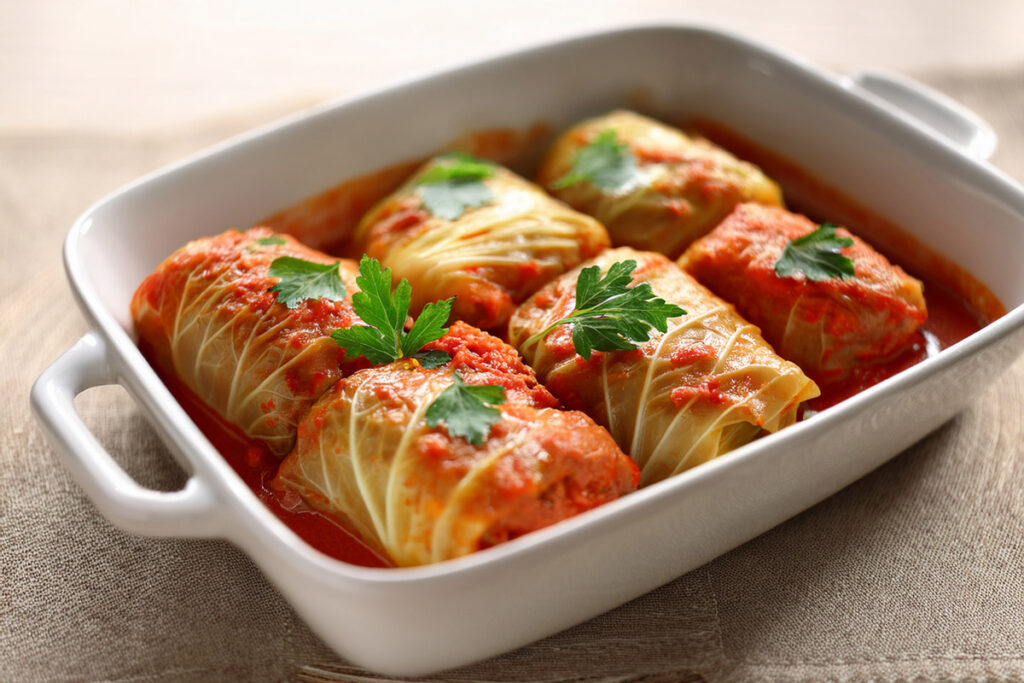
No Red Meat Stuffed Cabbage
Description
This delicious No Red Meat Stuffed Cabbage is a comforting and wholesome twist on the classic stuffed cabbage recipe. Tender cabbage leaves are filled with a savoury mixture of rice, lentils, vegetables, herbs, and aromatic spices, then gently baked in a rich tomato sauce until perfectly tender. This hearty meat-free stuffed cabbage is packed with plant-based protein and satisfying flavour, making it ideal for family dinners, meal prep, and cosy gatherings. Easy to prepare and naturally free from red meat, it is a delicious vegetarian-friendly comfort food that can be served with a fresh salad, crusty bread, or creamy yoghurt.
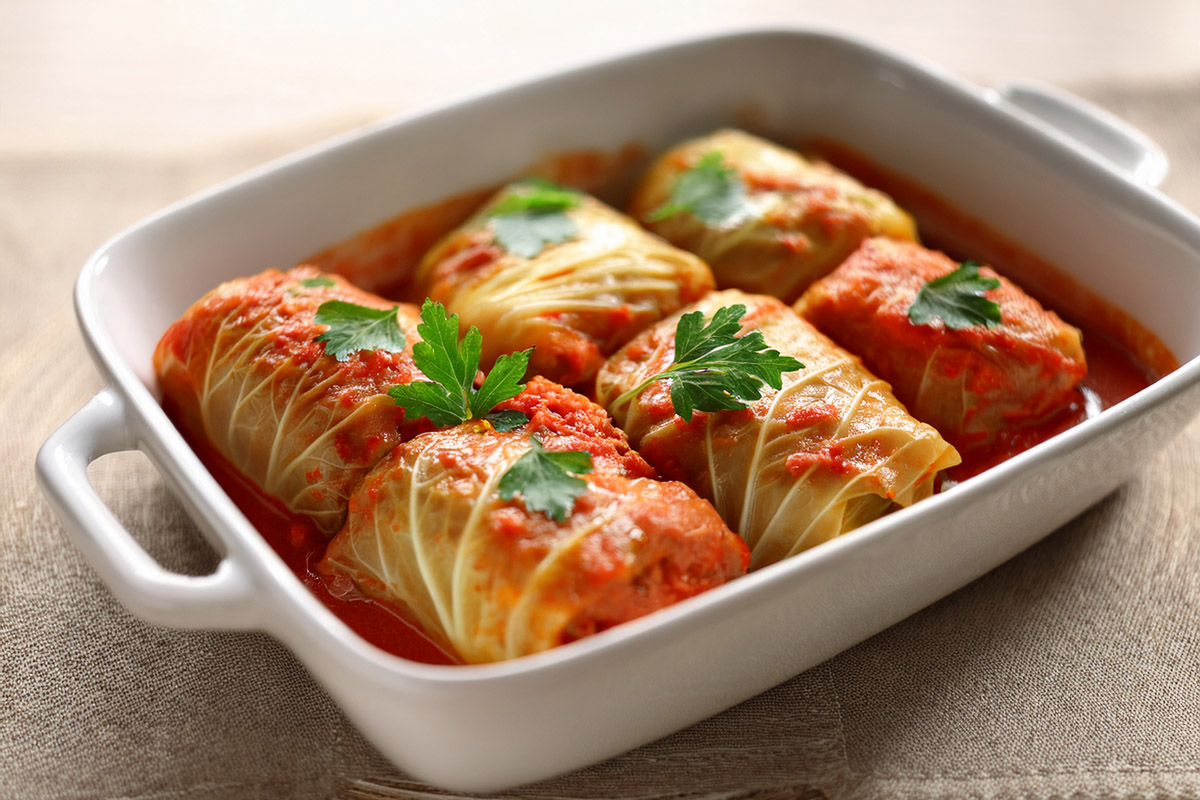
No Red Meat Stuffed Cabbage
This delicious No Red Meat Stuffed Cabbage is a comforting and wholesometwist on the classic stuffed cabbage recipe.
Ingredients
Method
- Preheat the oven to 180°C (350°F), or 160°C (320°F) for a fan oven.
- Carefully remove the outer leaves from the cabbage. Bring a large pot of salted water to a boil and place the cabbage in the water.
- Cook the cabbage for 5–8 minutes, gently removing the leaves one at a time as they soften. Set the softened leaves aside to cool.
- Once cool enough to handle, use a sharp knife to carefully trim away the thick central vein from each cabbage leaf without cutting through the leaf.
- To prepare the filling, heat the olive oil in a large frying pan over medium heat. Add the chopped onion and cook for 3–4 minutes until softened.
- Add the garlic, grated carrot, and courgette. Cook for another 4–5 minutes until the vegetables are tender and most of the excess moisture has evaporated.
- Stir in the cooked lentils, cooked rice, tomato purée, cumin, paprika, oregano, salt, black pepper, and fresh parsley. Cook for 2–3 minutes, stirring well, then remove from the heat.
- To make the tomato sauce, heat the olive oil in a saucepan. Add the chopped onion and cook for 3–4 minutes until softened.
- Add the garlic and cook for 30 seconds. Stir in the chopped tomatoes, vegetable stock, tomato purée, oregano, paprika, sugar, salt, and black pepper.
- Bring the sauce to a gentle simmer and cook for 8–10 minutes, stirring occasionally.
- Spread a thin layer of tomato sauce over the bottom of a large baking dish.
- Place a cabbage leaf flat on a clean work surface. Spoon approximately 2 tablespoons of the filling into the centre near the bottom of the leaf.
- Fold the sides of the cabbage leaf over the filling, then roll it up tightly from the bottom to create a neat cabbage roll.
- Place the cabbage roll seam-side down in the baking dish. Repeat with the remaining leaves and filling, arranging the rolls snugly next to one another.
- Pour the remaining tomato sauce evenly over the cabbage rolls. Cover the baking dish tightly with foil.
- Bake for 45 minutes. Remove the foil and bake for another 15–20 minutes, until the cabbage is completely tender and the sauce is bubbling.
- Allow the stuffed cabbage to rest for 10 minutes before serving. Garnish with fresh parsley and serve warm.
Notes
Chef’s Tips
- Choose a large cabbage: A large, fresh cabbage provides bigger leaves that are easier to roll and fill.
- Don’t overcook the leaves: They should be soft and flexible but not falling apart.
- Trim the thick vein: Removing the tough central rib makes the cabbage leaves much easier to fold and roll.
- Keep the filling moist: If your rice and lentils are very dry, add a splash of vegetable stock to the filling mixture.
- Don’t overfill: Use just enough filling to allow the cabbage leaves to close securely without splitting.
- Make it vegan: Ensure your vegetable stock and other ingredients are certified vegan if needed.
- Add extra flavour: A pinch of chilli flakes or a splash of lemon juice can add a delicious flavour boost to the filling.
- Make ahead: The stuffed cabbage rolls can be assembled a day in advance and refrigerated. Add a few extra minutes to the baking time if cooking directly from cold.
- Storage: Store leftovers in an airtight container in the refrigerator for up to 3 days. The flavours often become even better the next day.
- Serving suggestion: Serve with a crisp green salad, crusty bread, or a spoonful of plain yoghurt or plant-based yoghurt.
